

India’s textile sector, backed by government initiatives and a skilled workforce, offers a $350 Bn market with global export reach.

$34.4 Bn
Worth of Textile & Apparel exported by India in FY 2023-24

$4.34 Bn
FDI Inflow in Textiles (including Dyed, Printed) till Sept 2023

45 Mn
People employed in this sector
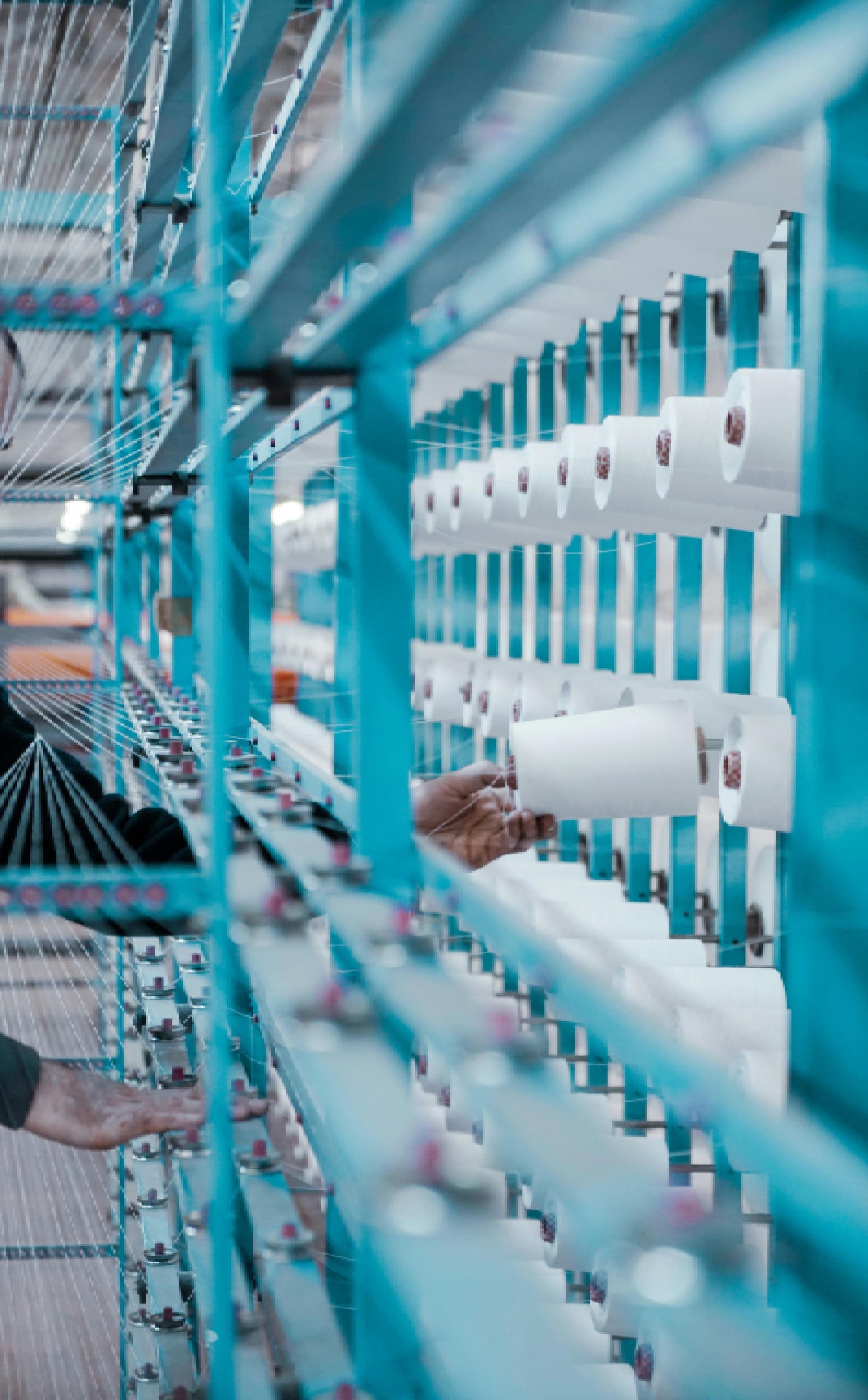
With rising per capita income, presently at $2,350, India boasts the second-largest working population with a median age of 28 years. The textile industry in India, thus, gains a pivotal role in knitting the tapestry of dynamism and growth of the sector with about a 4.5% share in the global textile and apparel trade. With a diverse range of fabrics and intrinsic craftsmanship, the textile sector offers a wealth of opportunities. India possesses the capability to manufacture the entire value chain and its products are exported to more than 100 countries. The sector provides employment to over 45 Mn people and produces about 22,000 Mn pieces of garments per year, with the market size projected to reach $350 Bn by 2030, from the current $174 Bn. With transformative changes in the textile sector, the government has also launched the PM MITRA Park Scheme with an outlay of INR 4,445 Cr to create an integrated textiles value chain from spinning to manufacturing at a single location. In line with the growth roadmap, the Indian textile market currently ranks fifth globally and the government is actively working to accelerate this growth to a rate of 15-20% over the next five years. Moreover, the sector acts as a crucial link between the agriculture and industrial sectors, supporting the cultivation of cotton, silk and other natural fibres and thus bridging the gap.
Recently, the government of India has also taken up initiatives to enhance cotton production. Kasturi Cotton, launched by the Ministry of Textiles, is a first-of-its-kind branding, traceability and certification exercise carried out jointly by the Government of India, trade bodies and industry to promote Indian cotton. Stakeholders across the supply chain, including farmers, ginning units, spinning mills, processing houses, weaving units, garmenting units, home textile manufacturers and even retailers and brands, will be involved in a collaborative effort to promote and enhance the value of Indian cotton across the domestic and overseas markets. The government has also taken key initiatives, like the Production-Linked Incentive Scheme, to promote the production of MMF apparel, MMF fabrics and technical textile products in the country. With a view to enhancing the skills of the workforce in the textile sector, the Samarth Scheme has been formulated under a broad skilling policy framework with the objective of providing opportunities for sustainable livelihood.
7% – Contribution to the industrial output of the country in value terms
$350 Bn – Expected growth of India’s textile industry by 2030
Presence of a Robust Ecosystem and an entire textile value chain.
Special focus on creating world-class infrastructure to support the industry. PM MITRA scheme will establish seven textile parks to make the country a global hub for textile manufacturing and exports.
Dedicated Support by both central and state governments with dedicated policies with attractive incentives covering green measures.
India has the largest and youngest workforce in the world.
Guidelines to incentivise domestic textile manufacturing and...

Credit support scheme empowering powerloom weavers with...
Funding to upgrade and modernise powerloom service...
Consolidated government guidelines summarising key provisions of...
General operational framework defining eligibility, procedures, and...

Guidelines for wool sector development under the...
Integrated initiative to strengthen India’s silk value...
Official notification establishing textile manufacturing parks to...
Gazette notification formalising National Tourism & Travel...
Programme to support artisans and promote India’s...
Subscribe To Indiaʼs Growth Story
Copyright © International Advisory Council. All rights reserved