

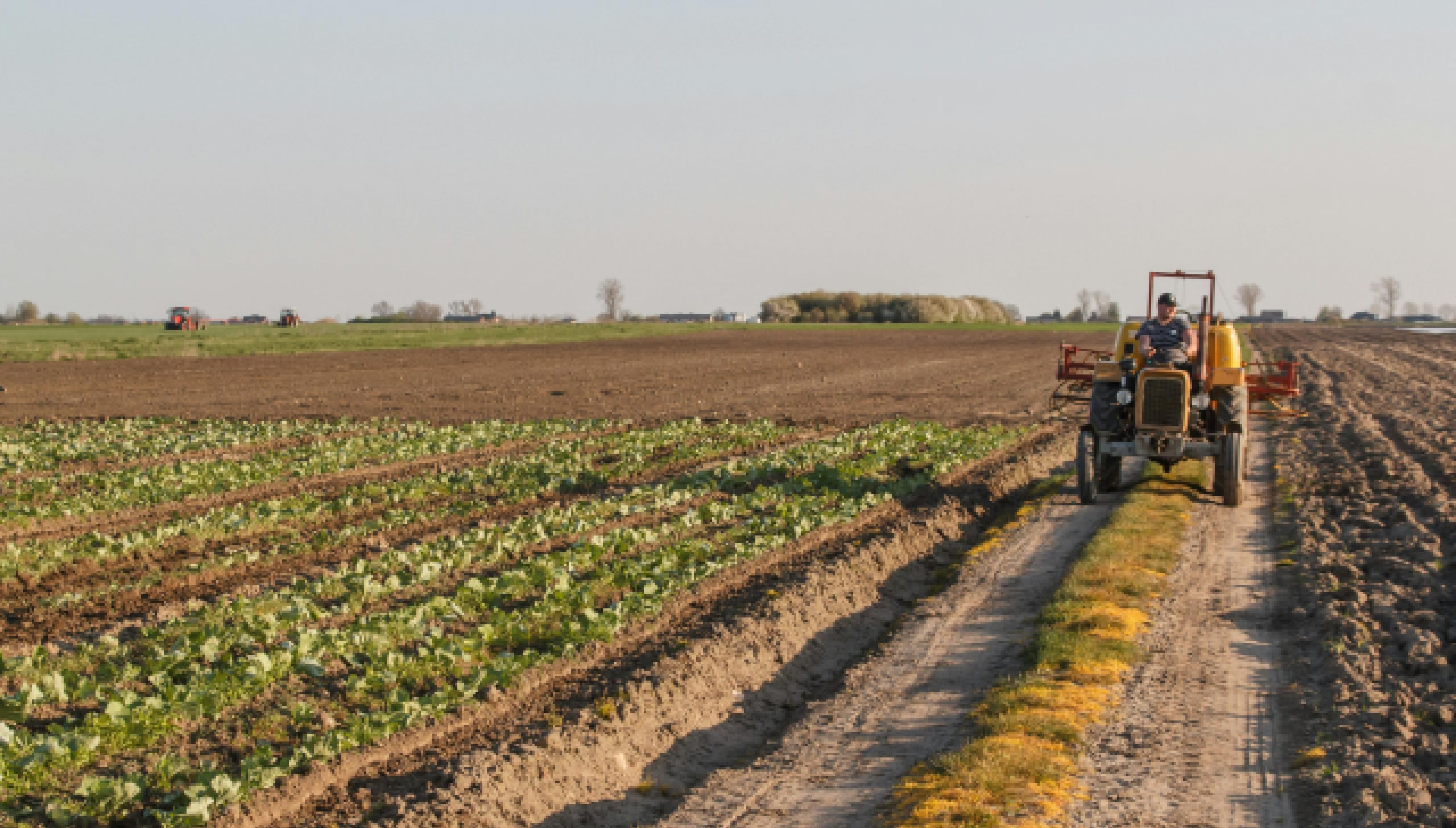
India’s agriculture sector is a high-growth investment opportunity with increasing exports, technological advancements and government support, offering potential for sustainable and profitable returns.

180 Mn Ha
Largest arable land in the world.

329.7 MT
Total food grain production for FY23, an increase of 14.1 Mn Tonnes compared to the previous year

2nd Largest
Largest producer of fruits, vegetables, tea, farmed fish, sugarcane, wheat, rice, cotton and sugar. The horticulture production was 355.25 Mn Tonnes in FY23, which is the highest ever.
India’s Agriculture & Allied Sector plays a pivotal role in the economy, driving inclusive growth and ensuring food security. Recent years have witnessed significant advancements aimed at enhancing productivity, sustainability and farmers’ livelihoods.
A notable achievement is the substantial increase in agricultural exports. Horticulture continues to thrive, with production in 2023-24 (First Advance Estimates) estimated at 355.25 Mn Tonnes, marking a 1.15% increase in cultivated area compared to the previous year. Moreover, improved infrastructure and post-harvest management have bolstered yields, benefiting small farmers and enhancing food and nutritional security. To further strengthen the sector, the government announced the development of large-scale clusters for vegetable production near major consumption centers.
During 2021-22, 59.12 lakh ha of area has already been brought under organic farming, thus ranking India at 4th place in terms of certified area globally under organic farming. This shift promotes soil health and sustainability and meets rising global demand for organic products, creating new market opportunities. Moreover, in the FY 2024-25 budget, the government announced that 1 Cr farmers nationwide will be introduced to natural farming, with support for certification and branding over the next two years. Additionally, 10,000 bioinput resource centers will be established based on specific needs.
A notable achievement is the substantial increase in agricultural exports. In the fiscal year 2022–23, India’s agricultural exports reached $53.1 Bn, with the Agricultural and Processed Food Products Export Development Authority (APEDA) contributing 51% of these exports. During April–December 2023, 18 out of 23 principal commodities in APEDA’s export basket showed positive growth, underscoring India’s robust performance in the global agri-market.
Further, India’s Agriculture Export Policy (AEP) seeks to boost farmers’ income and position India as a global leader in agriculture. By 2030, India aims to double its agricultural exports from the current level of approximately $50 Bn to $100 Bn.
Efforts toward climate-resilient agriculture remain crucial. Initiatives like the National Mission for Sustainable Agriculture (NMSA) focus on developing resilient crop varieties and sustainable farming practices to mitigate climate risks and ensure long-term agricultural sustainability.
Technological integration has transformed the sector, notably through the e-NAM (National Agriculture Market) platform. Currently, the platform integrates 1,260 APMC mandis across 22 states and 3 union territories, facilitating online trading of 203 agriculture and horticulture commodities. This digital initiative has improved price transparency and provided farmers with direct market access, thereby increasing their income potential.
To strengthen India’s agricultural ecosystem, the government has laid out several key initiatives in the recent budget. Over the next three years, the government aims to implement Digital Public Infrastructure (DPI) in agriculture, bringing over 6 Cr farmers under the formal land registry system. A Digital Crop Survey will be conducted in 400 districts during FY 2024-25, with the remaining districts covered in FY 2025–26. Additionally, the issuance of Jan Samarth-based Kisan Credit Cards (KCC) will be enabled in five states, helping farmers access inputs and credit for agricultural and allied activities, thus ensuring India’s agriculture growth drivers perform progressively.
In conclusion, India’s agriculture and allied sectors are pivotal for economic development. It leverages technology, sustainability and diversification to meet domestic needs and enhance global competitiveness. These initiatives promise significant economic contributions, improved food security, improved livelihoods for millions of farmers across the country and nutritional security for billions of consumers worldwide.
The agricultural sector is estimated to constitute 18% of India’s GVA in FY24.
India is the world’s largest producer of milk, pulses and spices. India is the second-largest producer of fruits, vegetables, tea, farmed fish, sugarcane, wheat, rice, cotton and sugar.
Agricultural exports rose to INR 4.2 Lakh Cr in FY23, boosting India’s global market presence.
Supportive policy measures like Agriculture Infrastructure Fund and Pradhan Mantri Krishi Sinchayi Yojana are transforming the agriculture sector.
PLI framework for millet-based food manufacturing.
...
Operational guidelines for the PLISFPI to strengthen...
Operational guidelines for APEDA’s FAS supporting export...
Framework and guidelines for the AIF scheme...
Subscribe To Indiaʼs Growth Story
Copyright © International Advisory Council. All rights reserved